
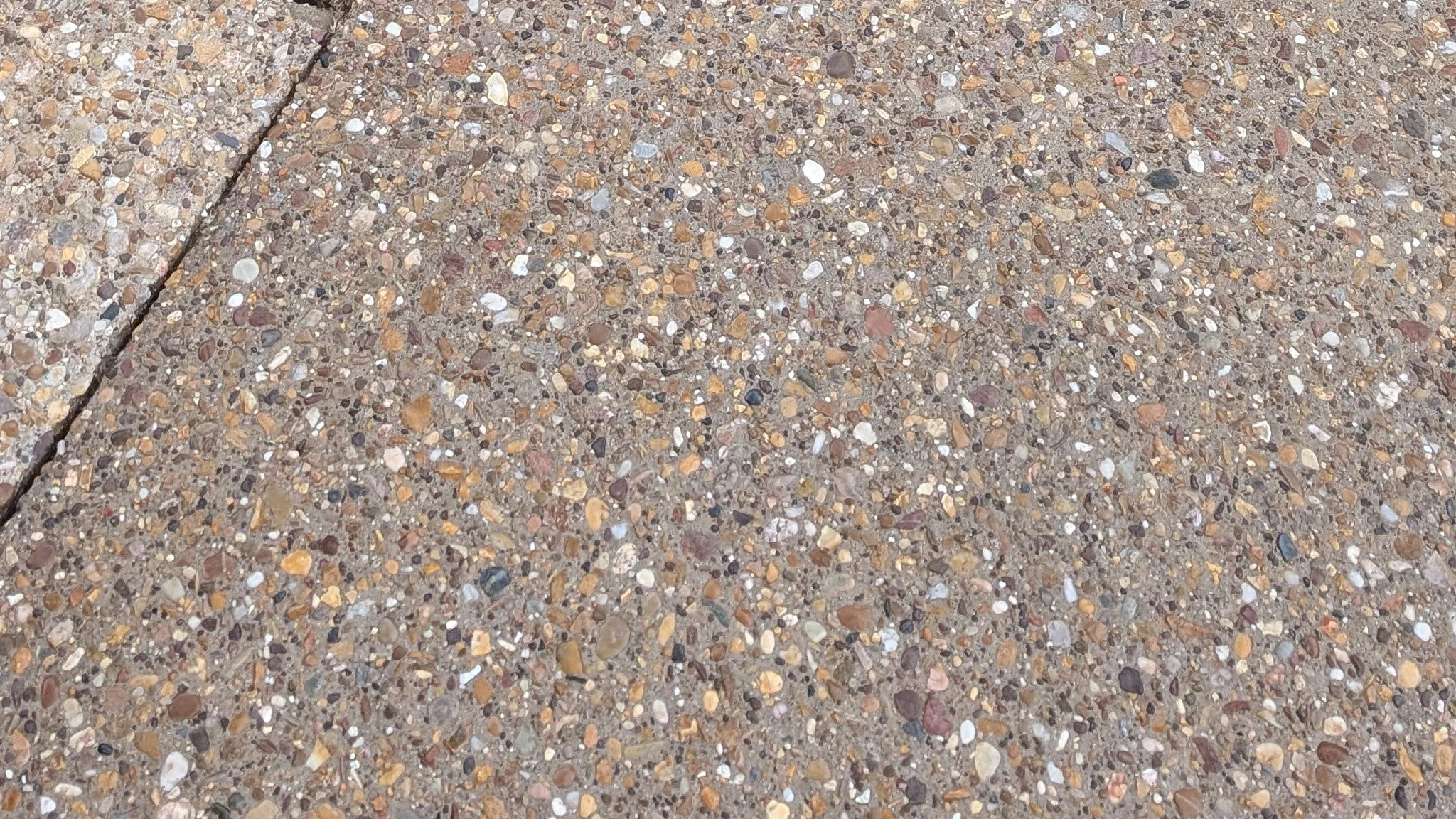
Exposed aggregate driveways are popular in Melbourne. They look sharp, feel textured underfoot, and that polished finish can last years if you care for them properly. The problem is that most homeowners — and a lot of contractors — treat them like standard concrete. And that's where it falls apart. Literally.
I've cleaned hundreds of driveways in Melbourne, and the ones that get damaged fastest are the exposed aggregate jobs that were blasted with a pressure washer at the wrong PSI. Once those pebbles loosen or the cement matrix cracks, you can't undo it. That's why I'm walking you through what exposed aggregate actually is, what can go wrong, and the approach that actually works.
What is exposed aggregate, and why does it matter?
Exposed aggregate isn't a different material — it's concrete with a twist. During installation, the top layer of concrete is ground or chemically treated to expose the decorative pebbles, stones, or gravel that are embedded in the cement matrix underneath. That's the appeal: the texture, the look, the durability rating.
But here's the catch. Those pebbles are held in place by cement. That cement is strong, but it's not bulletproof — especially when it's been weathered by Melbourne's rain, UV, and temperature changes. The bond between pebble and cement can weaken over time, particularly in shaded areas where moisture sits longer.
A standard concrete driveway? You can hit it hard with a pressure washer and it'll be fine. An exposed aggregate driveway? Go too hard and you'll strip the pebbles clean out, or worse, crack the matrix itself. Then you're looking at patching, re-sealing, or in bad cases, resurfacing the whole thing.
The damage you can actually do with pressure washing
Most of the time, homeowners ask me "Can I just use my pressure washer on this?" The answer is: only if you know what you're doing. Here's what happens when you don't.
Loosened or ejected pebbles
High pressure — anything above 1,200 PSI on exposed aggregate — can literally blast the pebbles out of the cement. You end up with a speckled, uneven surface where pebbles have been pulled clean away, exposing bare cement underneath. It looks terrible, and there's no easy fix.
Damage to the cement matrix
Even if the pebbles stay put, aggressive pressure washing can micro-fracture the cement between them. You won't see it immediately, but over the next season or two, water seeps into those tiny cracks, freezes in winter, and breaks the surface apart. Melbourne's damp winters make this worse.
Uneven finish
Pressure vary from spot to spot — your technique, the nozzle angle, the distance you hold the wand — and this shows up dramatically on exposed aggregate. You end up with patches where the aggregate is exposed differently, or where the colour has been unevenly lightened. It looks patchy and unfinished.
Pro tip: If your exposed aggregate driveway is more than 5 years old or sits in a shaded, damp spot, the cement bond is already weaker. That makes it even more vulnerable to pressure damage. This is exactly when you should call a pro instead of DIYing.
The right way to clean exposed aggregate
So what actually works? The key is treating exposed aggregate like the delicate surface it is. This isn't about blasting — it's about chemistry and patience.
Pre-treatment with appropriate cleaners
Before any water touches the surface, I apply a chemical pre-treatment. Depending on what we're dealing with — organic stains, mould, algae, or just general dirt — we use the right product. In Melbourne's humid climate, algae and mould are the biggest offenders. A good biodegradable algaecide or fungicide sits on the surface and does the breaking-down work for you. You're letting chemistry do the heavy lifting, not water pressure.
Soft rinse, not pressure blast
After pre-treatment, we rinse at low pressure — typically 500–800 PSI, and usually from a wider, softer nozzle pattern. The chemical has already loosened the dirt and organic growth, so you don't need brute force. A gentle rinse at the right angle removes the loosened material without stressing the pebbles or matrix. Think of it like rinsing delicate glassware: you're not trying to scrub, you're gently removing what's already been lifted.
Directional technique matters
The angle and direction of the water flow matters massively. We work at a shallow angle, moving consistently and smoothly across the surface. We never hover in one spot, and we always work away from joints or edges where the pebbles might be more loosely set. Muscle memory and experience count here.
After cleaning: sealing is essential
Once the driveway is clean and dry, the next step that most people skip is sealing. This is where you protect your work and prevent regrowth of mould and algae.
A good quality, UV-stable sealer — usually a penetrating or sacrificial sealer, depending on your aesthetic preference — soaks into the pores of the exposed pebbles and cement. It repels water and dirt, slows down weathering, and makes the colour and finish pop. In Melbourne, where we get decent rainfall, sealing also helps prevent the cement matrix from re-saturating and weakening.
When to call a pro instead of doing it yourself
If your driveway has:
- Visible cracks or spalling (flaking pebbles)
- Loose or missing pebbles in patches
- Heavy algae or mould staining that you've tried to remove
- Been exposed to salt spray or industrial fallout
- Heavy shading with consistently damp conditions
...then bring in a professional. The cost of fixing a pressure-damaged driveway is way higher than the cost of cleaning it right the first time. I've had too many jobs where a homeowner rented a pressure washer, thought they were saving money, and ended up spending three times as much on repair work.
Exposed aggregate is an investment. Treat it like one.
Ready to clean your exposed aggregate safely?
We know exposed aggregate inside out. Book a no-obligation inspection and we'll tell you exactly what your driveway needs.