
Why Your Bricks Turn Black (And Why Pressure Washing Won't Fix It)
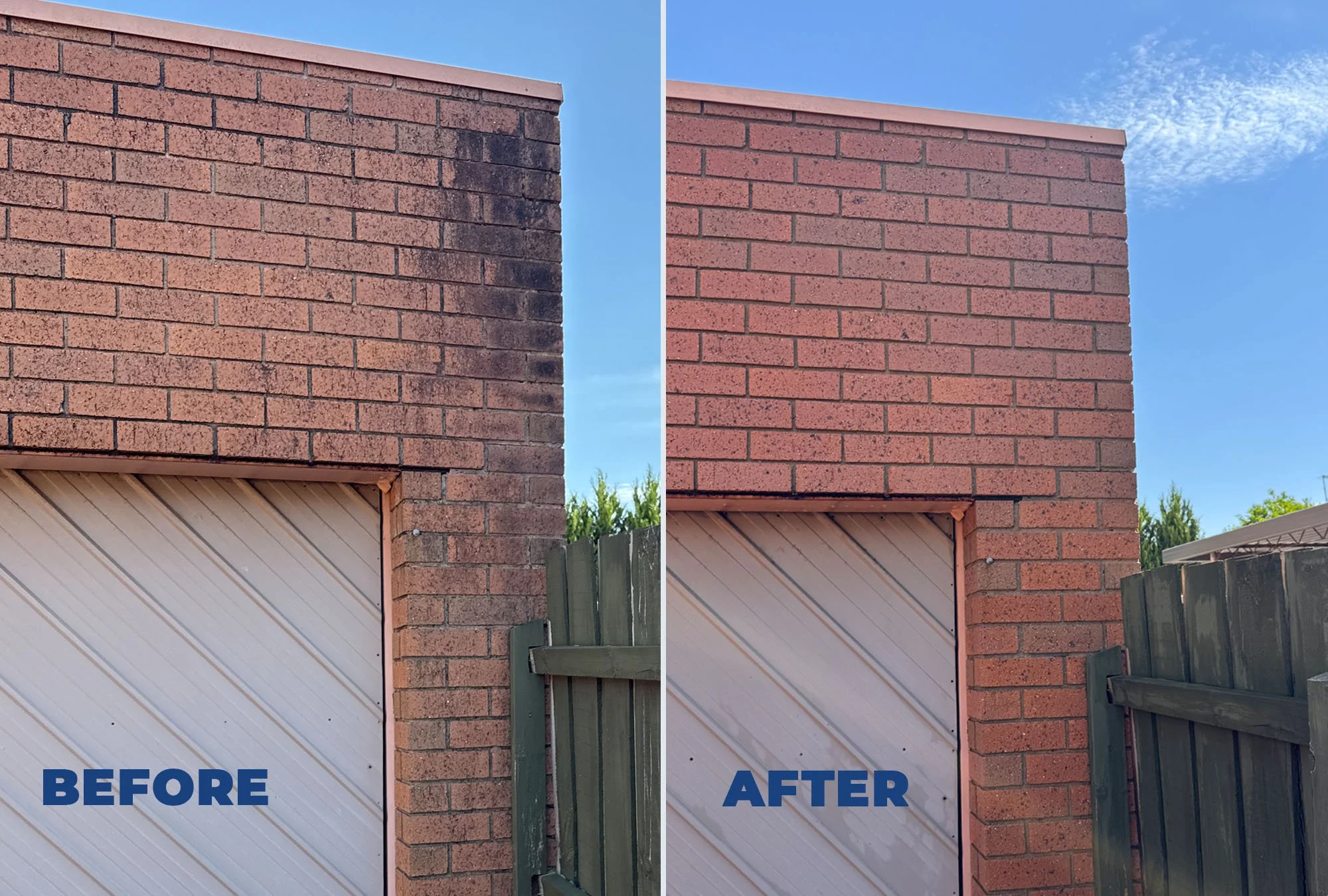
Soft wash brick cleaning Melbourne — before and after
If you own a brick home in Melbourne, you’ve likely noticed it: dark, unsightly vertical streaks running down your walls. It makes the property look aged, neglected, and dirty.
Many homeowners assume this is just an accumulation of dirt, soot, or pollution. They grab a high-pressure washer from Bunnings and blast away, only to find the stain barely moves—or worse, comes back darker a few months later.
We recently completed a job in Melbourne (see the photos above) that perfectly illustrates this issue. Today, we’re explaining exactly what that "black stuff" is, and why scrubbing it with high pressure is actually the wrong approach.
What is the black stuff on my brickwork?
The black staining you see on brick walls, concrete, and roof tiles is rarely just dirt. It is a living infestation.
Most commonly, this is Gloeocapsa magma, a type of bacteria that behaves like algae. It creates a dark, hard outer shell to protect itself from UV rays—which is why it appears as black streaks. In damper areas, this is often a "biofilm"—a sticky layer containing a mix of this bacteria and black mould (Cladosporium).
This organic growth thrives in Melbourne’s variable climate. It feeds on the moisture held in the porous brick and the minerals (like limestone) found in your mortar.
Why High-Pressure Washing Fails on Brick
When you see a stain, the instinct is to blast it with high pressure. However, on porous surfaces like brick, this is often a mistake for two reasons:
1. The "Haircut" Effect
Using water pressure alone is like giving the algae a haircut. You might blast away the visible surface layer (the black top), but the "roots" (filament structures) remain deep inside the pores of the brick. Because you haven't killed the organism, it simply grows back—often faster and thicker than before because the water has actually fed it.
2. Damage to the Masonry
Bricks have a fired "skin" that protects them. Blasting them with 3,000+ PSI can strip this layer off, making the brick more porous and sponge-like. This leads to faster water absorption in winter, risking structural damage and creating an even better environment for mould to grow next time. It can also blow out the mortar joints, leading to expensive repointing repairs.
The Solution: Soft Washing
For the job pictured above, we didn't use high pressure. We used a method called Soft Washing.
Soft washing relies on specialised cleaning solutions rather than brute force.
Step 1: We apply a biodegradable treatment that penetrates the pores of the brick.
Step 2: This treatment kills the mould and algae at the root level, effectively sanitising the surface.
Step 3: We gently rinse the wall with low pressure (about the strength of a garden hose).
The Result
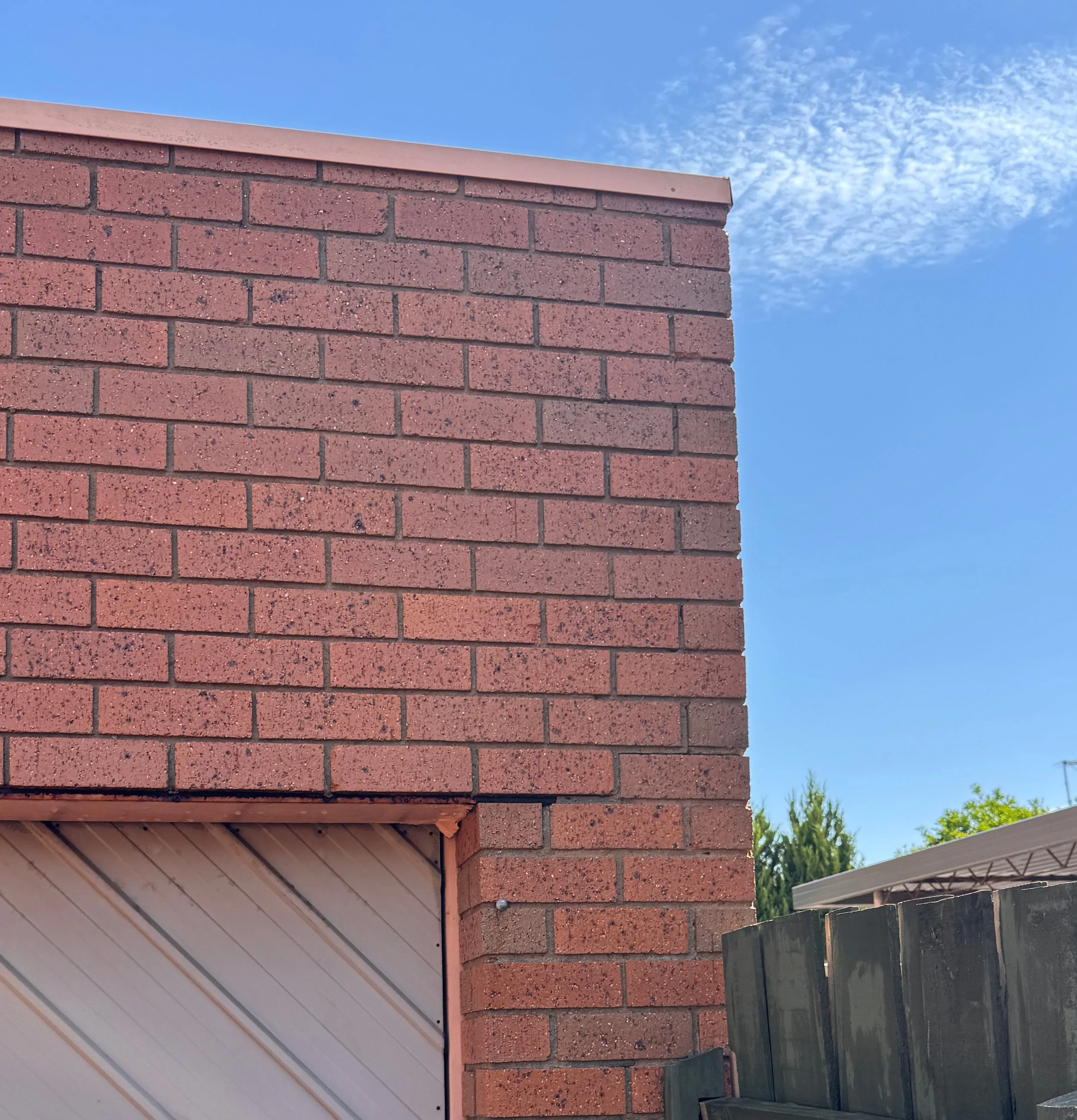
Cleaned red brick wall Melbourne — soft wash result
As you can see in the photo, the black streaks are completely eradicated, and the natural red of the brick is restored. Because we killed the spores, this clean will last 4–6 times longer than a standard pressure wash.
Project Details
Location: Melbourne, VIC
Surface: Red Brick Masonry
Issue: Heavy biological staining (Gloeocapsa magma / Black Mould)
Method: Soft Wash Treatment
Need help with your brickwork?
Don't risk damaging your home with high pressure. If your Melbourne property is showing signs of black mould, green algae, or general weathering, we can restore it safely.